
Why cats scratch
For cats, scratching is not bad behaviour, but grooming, communication and relaxation all at once. Here you’ll find out what is behind it and how to give your cat a scratching spot they will choose over your sofa.

In short
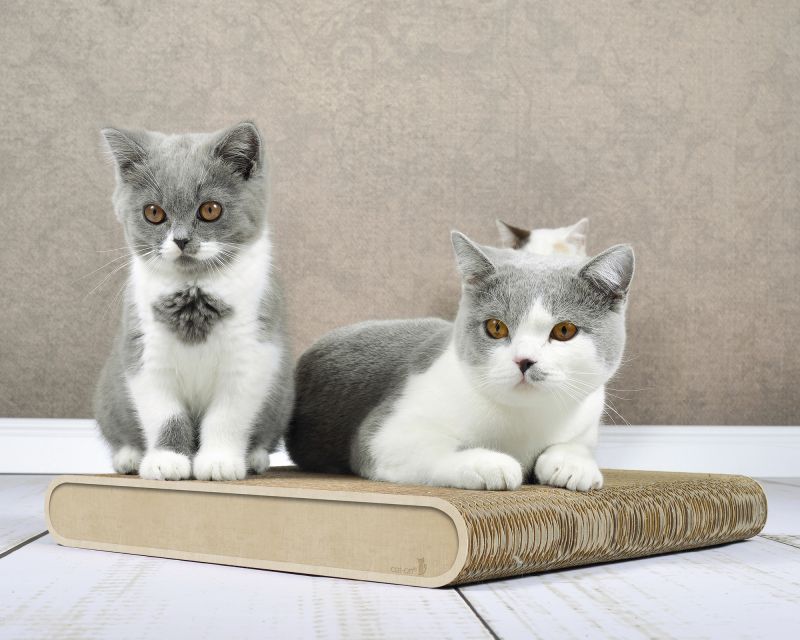
Cats scratch for three reasons: they care for their claws, they leave territorial marks with the scent glands on their paws, and they stretch and release tension.
You can’t train this out of them, but you can redirect it: with sturdy scratching furniture exactly where your cat wants to scratch, and in the direction they prefer.
The three reasons in detail
1. Claw care
A cat's claws grow in layers. Scratching sheds the worn outer sheaths and reveals the new, sharp claw underneath. You will sometimes find the empty sheaths on the scratching board or on the floor in front of it.
2. Scent marks and communication
Cats have scent glands between their paw pads. When your cat scratches, it leaves two messages: visible marks and a scent that other cats can pick up. That is why cats like to scratch in prominent places such as the hallway, the sofa or wherever the family gathers.
3. Stretching and relaxing
After waking up, when excited or out of joy when you come home: scratching stretches your cat from the front legs to the back and releases tension. Some cats then knead contentedly on the cardboard. It is the same movement kittens use to stimulate milk flow while nursing.
Horizontal or vertical?
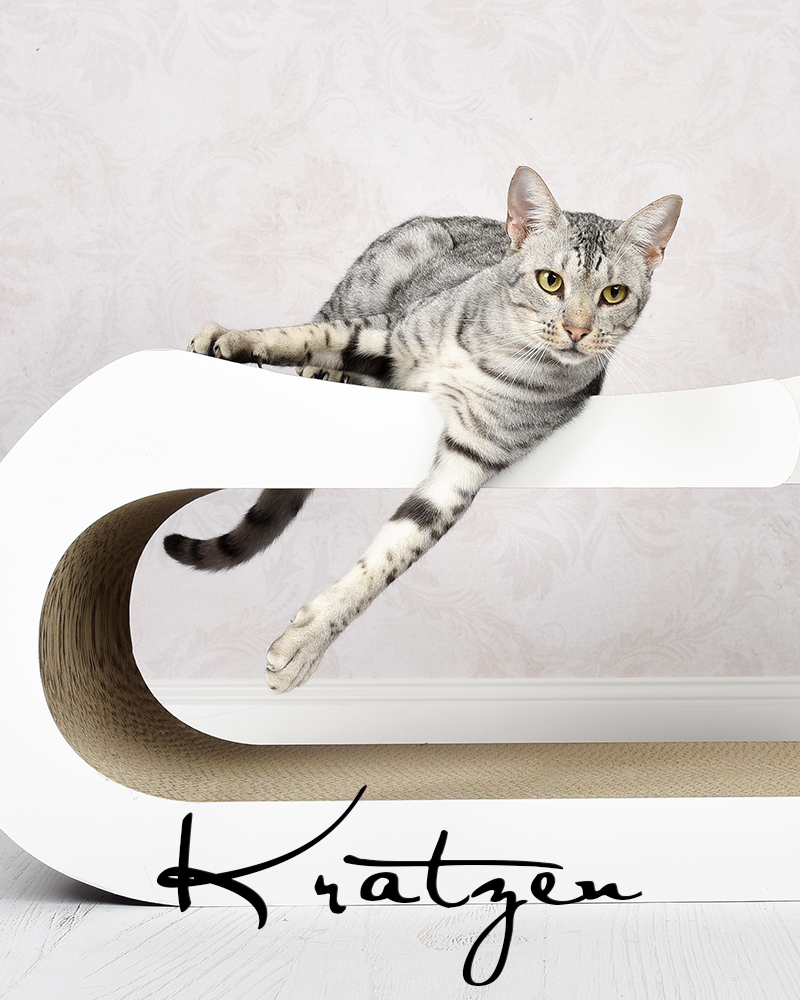
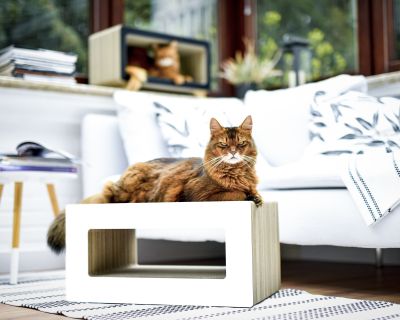
Most people think of a cat tree first. Yet many cats prefer to scratch horizontally: on the rug, the doormat or the sofa cushions. Watch where and how your cat scratches. Flat scratching boards and scratching waves suit horizontal scratchers. For vertical scratching at sofa corners and door frames, taller models or wall scratchers work better.
Horizontal scratching is often linked to relaxation. When a cat lies on a surface and works it rhythmically with its paws, it feels safe. That is why many cats also use a flat scratcher as a bed, a lookout and a launch and landing pad.
Stability matters more than size
A scratcher that slides, wobbles or tips over at the first strong pull will be avoided. The cat loses trust, looks for other spots or hardly scratches at all. Large, strong cats such as Maine Coons, Norwegian Forest Cats or British Shorthairs in particular need long, wide and heavy scratching surfaces on which they can stretch out fully, jump off and land without anything moving.
Scratching on corrugated cardboard


Which scratcher suits your cat?
- Kittens: low, flat scratching boards and gentle waves they can climb onto easily and that will not tip over.
- Senior cats: a low entry and a lounging surface that doubles as a scratching surface, such as LOOP or LE MOULE. More in Cats in cat bowls.
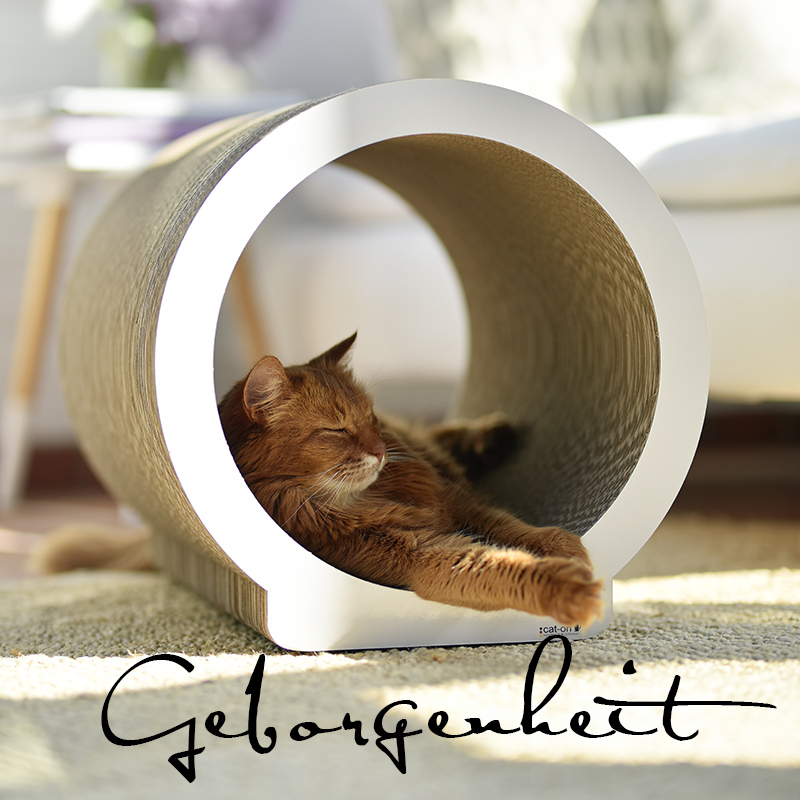
- Shy cats: scratchers with a cave, like the cat basket BILLE or the cat stairs LESCALIER. In multi-cat households these spots keep the peace, because every cat has its own place. More in Hiding places for cats.
- Climbers: wall furniture such as KIO TADASHI or SOI SHIBUI, which can be combined into climbing routes. More in Why do cats climb? and Cat climbing walls.
How to redirect scratching
- Observe: where does your cat scratch today, horizontally or vertically?
- Place: put the scratcher exactly there or right in front of it.
- Next to the sleeping spot: cats love to scratch right after waking up.
- Make the old spot less attractive: cover the sofa corner with a blanket until the new scratcher is accepted.
- Praise, don't scold: punishment unsettles your cat and only moves the scratching elsewhere.
What makes a good scratcher
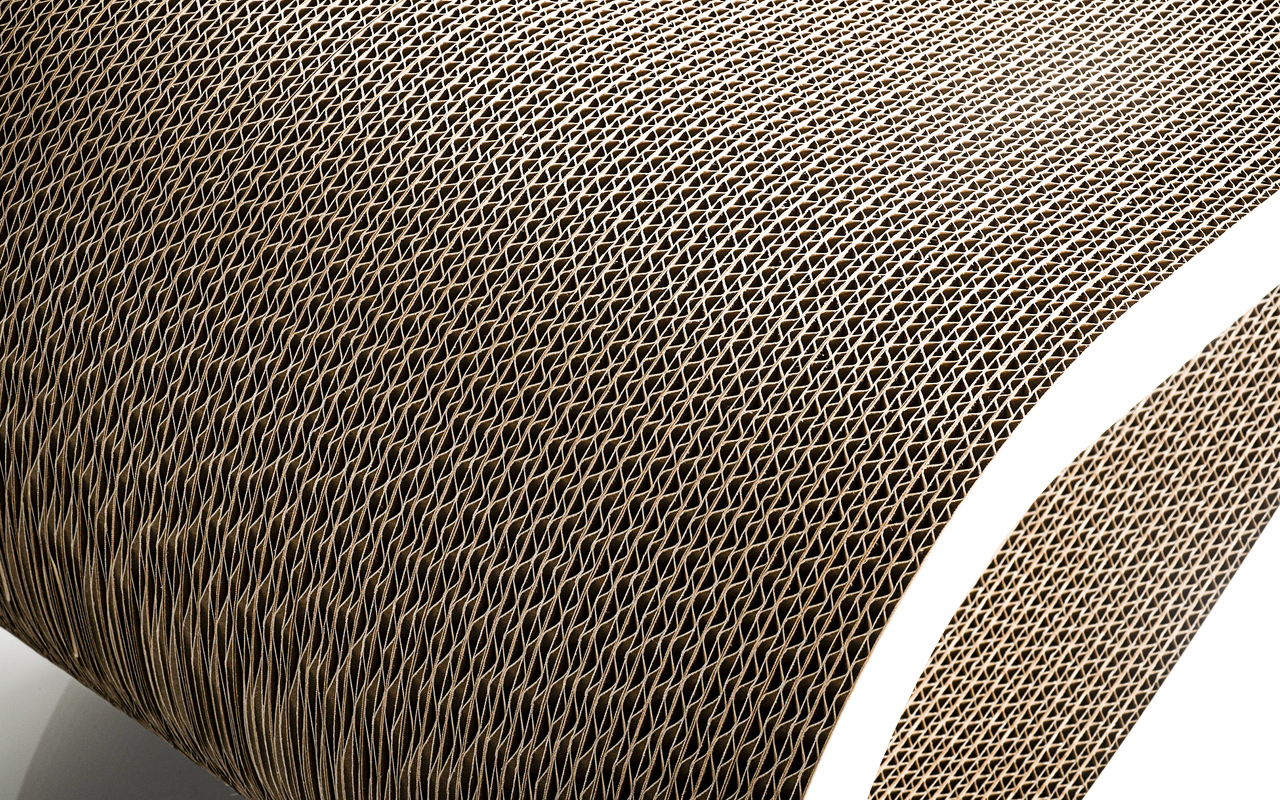
- Construction: our furniture is not screwed together but glued by hand, layer by layer. The continuous honeycomb structure of the corrugated cardboard makes it light yet strong, even when heavy cats jump onto it.
- Material: multi-layered, regionally produced corrugated cardboard made from FSC-certified long virgin fibres, bonded with vegan, odour-neutral glue. It gives slightly under the claws while still offering grip: not too soft, not too hard.
- Ergonomics: our scratching waves are high enough for your cat to stretch its shoulders fully while scratching. Our lounging bowls follow the curves of a cat's body.
- Wall furniture: it hangs on sturdy aluminium brackets and can be combined into a climbing landscape.
Why cats love corrugated cardboard is explained in Cardboard cat scratchers.
Made in Berlin by Martin and Silvia Frank
cat-on is run by Martin and Silvia Frank. Martin founded the brand and designs the furniture; Silvia shapes the design and the way the workshop runs. Together with a small team they have been making every piece by hand in Berlin for more than ten years: no stock product, no import, no assembly line.
Personal advice
Not sure which scratcher suits your cat? Write to us, we are happy to advise you personally: Get in touch.
The four themes of the cat-on guide
 ScratchingWhy cats scratch
 EnjoyingWhy cats love cardboard
 ClimbingWhy do cats climb?
 Retreat & securityHiding places for cats
Read more: Cats and scratching boards · Cats on wall scratchers
Frequently asked questions about scratching
Why does my cat scratch the sofa even though they have a scratching board?
In most cases, the location or direction is not right. Place the scratching board directly by the corner of the sofa and choose the orientation your cat uses there: vertically on the corner, horizontally on the seat.
Do cats prefer scratching horizontally or vertically?
This varies from cat to cat. Many enjoy scratching horizontally on the floor. Observe your cat and ideally offer both options.
Why does my cat scratch straight after waking up?
They stretch while doing so and mark their territory at the same time. Scratching furniture next to the sleeping spot is therefore particularly well accepted.
Can I stop my cat from scratching?
No, and you shouldn’t try to. Scratching is a natural need. Redirect it to suitable scratching furniture. Declawing is prohibited in Germany under the Animal Welfare Act.
Can scratching furniture made from corrugated cardboard withstand large cats too?
Yes, if it is properly made. Our furniture is glued layer by layer and is highly load-bearing thanks to the honeycomb structure of the corrugated cardboard. Even large cats such as Maine Coons can jump, scratch and lie on it.
Is corrugated cardboard suitable for scratching?
Yes. Corrugated cardboard gives claws grip, yields slightly when scratched and deliberately wears down in the process. Many cats then lie down on their scratching furniture straight away.


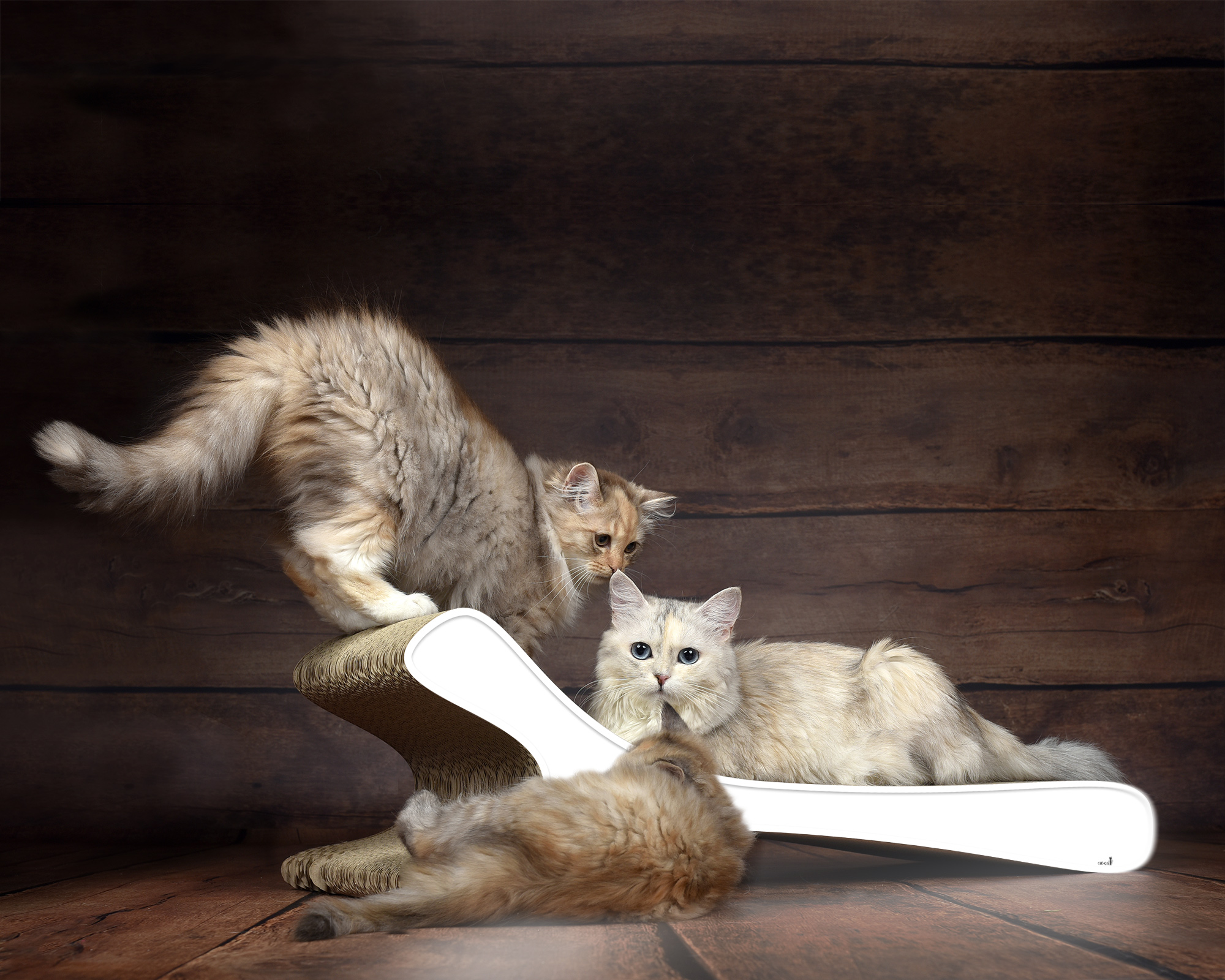

Sturdy enough for large cats
FELINE XL is long, wide and heavy enough for even large cats to stretch out fully while scratching.


